
If you’ve been thinking about trying Brazilian Jiu Jitsu but wondering whether you’re too old to start, you’re not alone. Maybe you're in your 30s with a career and a family to take care of. Maybe you're in your 40s and haven't participated in a sport in years. Maybe you're in your 50s or 60s and looking for something that challenges you physically and mentally. Maybe you've recently retired and finally have the time to try something you've always wanted to do. The question is usually the same: Am I too old to start Jiu Jitsu? No. But the way you approach Jiu Jitsu at 50 shouldn't necessarily be the same way you approach it at 18. And that's an important distinction. Jiu Jitsu Was Designed Around Technique, Not Just Strength Our Jiu Jitsu lineage at Growth Mindset Collective traces back through my professor, Eduardo Rocha, and Royler Gracie to Hélio Gracie, one of the foundational figures in Brazilian Jiu Jitsu. Hélio was well known for continuing to practice and teach Jiu Jitsu into his later years. That longevity reflects something fundamental about the art. Jiu Jitsu isn't supposed to be just a contest of who is younger, stronger, faster, or tougher. It is the study of mechanics. Leverage. Position. Timing. Weight distribution. Frames. Angles. Balance. The better you understand those concepts, the less dependent you become on brute strength. And as you get older, that becomes increasingly important. I Started Jiu Jitsu at 19. I'm 39 Now. I've experienced this evolution in my own training. I started Jiu Jitsu when I was 19 years old. At 19, I was doing CrossFit, training twice a day, eating pretty much anything I wanted, staying up late, and generally not thinking for a second about recovery. I'd train with anyone. I wasn't thinking much about whether a particular round was a good idea or whether I might get injured. I was thinking about one thing: Winning the round. At 39, I'm still on the mat every day teaching and training. But the way I approach training has changed significantly. I have to put more effort into recovering from the training itself. I have to pay attention to what I eat. I have to go to bed at a decent time. I have to think about what I'm asking my body to do tomorrow, not just what I want it to do today. And my actual rounds have changed too. If I go to an open mat today, I pick my opponents much more carefully than I did when I was 19. I'm probably not walking in and immediately trying to have five wars with black belts. I'll find a few white belts and blue belts and get some warm-up rounds in first. Then I can gradually increase the intensity of my training. That's not because I've become less serious about Jiu Jitsu. It's because I've become more deliberate about it. Your Level of Dedication Matters Too There's another important distinction here. My life at 39 is different from the life of many 39-year-old Jiu Jitsu hobbyists. Jiu Jitsu is my profession. I own an academy. I teach. I train. I've spent 20 years practicing the art. That means the amount of time and energy I'm willing—or required—to dedicate to Jiu Jitsu may be completely different from someone who trains two or three evenings a week after work. And that's okay. You have to decide what level of dedication you want to invest and then train appropriately. If you're a 38-year-old parent with a full-time job who wants to train twice a week, your recovery, training volume, and expectations shouldn't necessarily look like those of a professional athlete or academy owner. You don't have to organize your entire life around Jiu Jitsu to benefit from training. Your training should fit your life. My Oldest Student Started at 86 The oldest student I've ever taught was an 86-year-old man named Pete. Pete's Jiu Jitsu did not look like the Jiu Jitsu of a local high school wrestler. And it shouldn't have. A high school wrestler may walk into a Jiu Jitsu academy with years of grappling experience, excellent conditioning, fast recovery, and a body accustomed to intense physical training. That athlete might be ready for hard rounds or even competition very quickly. Pete was at an entirely different stage of life. So his training needed to look different. That doesn't make Pete's Jiu Jitsu less legitimate. It means good Jiu Jitsu training meets people where they are. Different Stages of Life Require Different Jiu Jitsu A 17-year-old wrestler, a 35-year-old dad, and a recently retired 65-year-old can all train Jiu Jitsu. But they shouldn't necessarily train the same way. The young wrestler might have a body prepared to practice hard five or six days a week. The 35-year-old dad has a career and a family. He needs to get up tomorrow morning, go to work, and take care of his kids. The recently retired student may finally have plenty of time to train, but may also need to account for previous injuries, mobility, recovery, and decades of wear and tear. All three can have a great experience with Jiu Jitsu. Their strategies simply need to be different. The Older You Get, the More Strategic You Need to Become As you get older, training intelligently becomes increasingly important. That means listening to your body. It means choosing training partners intelligently. It means knowing when to push and when to slow down. It means tapping when you're caught. And most importantly, it means becoming a student of the mechanics and science behind Jiu Jitsu. Being tough isn't the same thing as ignoring your body's limits. If your goal is to practice Jiu Jitsu for years, getting injured because you refused to tap or tried to match the explosiveness of a 19-year-old athlete doesn't accomplish much. Instead, start asking better questions. Where should my weight be? Where is my opponent's base? What angle creates the leverage I need? Which frame prevents them from advancing? Where am I wasting energy? What reaction am I trying to create? The older you get, the more Jiu Jitsu becomes about what you know. My Training Has Become More Focused as I've Gotten Older This is probably the biggest difference between the way I trained at 19 and the way I train at 39. Today, I usually have mini goals within my rounds. I might be working on a specific position, reaction, sequence, or concept. Those individual goals fit into a larger theme I'm developing so that, over time, I'm building an entire system around it. My sparring has direction. At 19? It was basically kill or be killed. There wasn't much of a plan. I wanted to win every exchange and every round. There's certainly value in the intensity and athleticism of young Jiu Jitsu. But longevity requires something more. Eventually, training needs to become deliberate. My Professor Is Still Training and Competing in His 60s I've also been fortunate to see what longevity in Jiu Jitsu looks like firsthand through my professor, Eduardo Rocha. Professor Rocha is in his 60s and is still training and competing, including at the IBJJF Master World Championship. He's also a multiple-time world champion. With that level of experience, it would be easy for someone to let ego dictate how they train. Instead, one of the lessons I've seen is the importance of being realistic about what changes as you age. A younger, highly trained athlete may be able to tap an older black belt if the older practitioner decides to meet that athlete muscle for muscle, speed for speed, and athleticism for athleticism. Experience doesn't make biology disappear. The answer isn't pretending you're still 25. It's making the match about Jiu Jitsu. Technique for technique. Knowledge for knowledge. Position for position. The older you become, the more valuable that knowledge becomes. For the Young, Dominance. For the Older, Sophistication. This is one of the things I find most interesting about Jiu Jitsu. For the young, the art can feel like dominance . You're discovering how to combine technique with speed, strength, explosiveness, and conditioning. You can push the pace. You can scramble. You can test yourself physically. As you get older, good Jiu Jitsu begins to feel more like sophistication . You recognize situations earlier. You stop fighting battles that don't matter. You conserve energy. You create reactions. You understand where someone wants to go before they get there. You stop trying to force Jiu Jitsu to happen and start understanding why it happens. The body may become less forgiving as you age. But your mind can become significantly better at Jiu Jitsu. When Young Athletes Develop That Mind, You See the Next Evolution There's another side to this. Older practitioners are often forced to become more technical because eventually they can't rely on athleticism alone. Young athletes don't have that same limitation. That's why it's so impressive when a young athlete develops that sophisticated understanding early. Now you have the speed, strength, explosiveness, and recovery of youth combined with the technical mind we normally associate with decades of experience. That's where you start seeing another evolution of the art. It's rare for a young practitioner to have that level of patience and technical understanding because their athleticism gives them other ways to solve problems. The older student doesn't always have that luxury. They are forced to learn. And that can ultimately become one of their strengths. You Don't Need to Get in Shape Before Starting We commonly hear adults say: "I want to try Jiu Jitsu, but I need to get in shape first." You don't need to get into Jiu Jitsu shape before starting Jiu Jitsu. You do need to respect where your body is today. If you haven't exercised regularly in several years, your first goal shouldn't be keeping up with the most conditioned athlete in class. Start learning. Learn how to move. Learn the positions. Learn how to breathe. Learn when you're using unnecessary energy. Give your body time to adapt to a new physical challenge. Consistency over time is far more valuable than destroying yourself during your first week and then being unable to train. Your Wins Will Come From Understanding When you first start, experienced students will probably be better at Jiu Jitsu than you. They're supposed to be. But as you begin understanding the mechanics, you'll start experiencing little wins. Maybe you remembered to frame instead of panicking. Maybe you recognized a sweep before your partner completed it. Maybe you stayed calm in a position that used to overwhelm you. Eventually, you'll sweep someone, escape, maintain a position, or catch a submission that you couldn't before. And there's something incredibly satisfying about knowing it worked because you understood what was happening. Not because you were stronger. Not because you were younger. Because you learned. Everyone Gets the Community Whether you start at 19, 39, 59, or 86, there's another part of Jiu Jitsu that isn't dependent on age: Community. When you train consistently, you become part of other people's progression. Someone helps you when you're new. Eventually, you're the person helping the next new student. You watch teammates earn belts, prepare for tournaments, struggle through difficult positions, come back from injuries or time away, and accomplish things that once seemed impossible. And they're there for your progression too. There's a feeling that comes from progressing at something difficult while also being part of someone else's progress. You don't have to be a world champion to experience that. So, Are You Too Old for Jiu Jitsu? If you're asking whether you're too old because you can't train like a 20-year-old anymore, here's the important part: You're not supposed to train like a 20-year-old. Train like you. Respect your current abilities. Understand your limitations. Choose good training partners. Learn the mechanics. Take recovery seriously. Set realistic expectations. Decide how much of your life you want to dedicate to Jiu Jitsu and build your training around that decision. I've taught an 86-year-old beginner. I started at 19 and I'm still training every day at 39. My professor is still training and competing in his 60s. None of those versions of Jiu Jitsu look exactly the same. They aren't supposed to. That's part of what makes this art something you can potentially practice across a lifetime. Jiu Jitsu is for everyone, but everyone's Jiu Jitsu doesn't have to look the same. For the young, it may feel more like dominance. For the older practitioner, it may feel more like sophistication. And for everyone, there is the opportunity to learn something difficult, progress alongside other people, and become part of a community built around helping each other get better. Start Jiu Jitsu in Oakley, California Growth Mindset Collective offers Brazilian Jiu Jitsu classes for adults in Oakley, CA, serving Oakley, Brentwood, Antioch, and the surrounding East Contra Costa community. Our adult program welcomes complete beginners. You don't need previous martial arts experience, and you don't need to already be in Jiu Jitsu shape. Whether you're 30, 40, 50, 60, or beyond, your Jiu Jitsu doesn't have to look like the 18-year-old athlete training next to you. It needs to work for you, your body, your goals, and your stage of life. The only way to start figuring out what that looks like is to get on the mat.
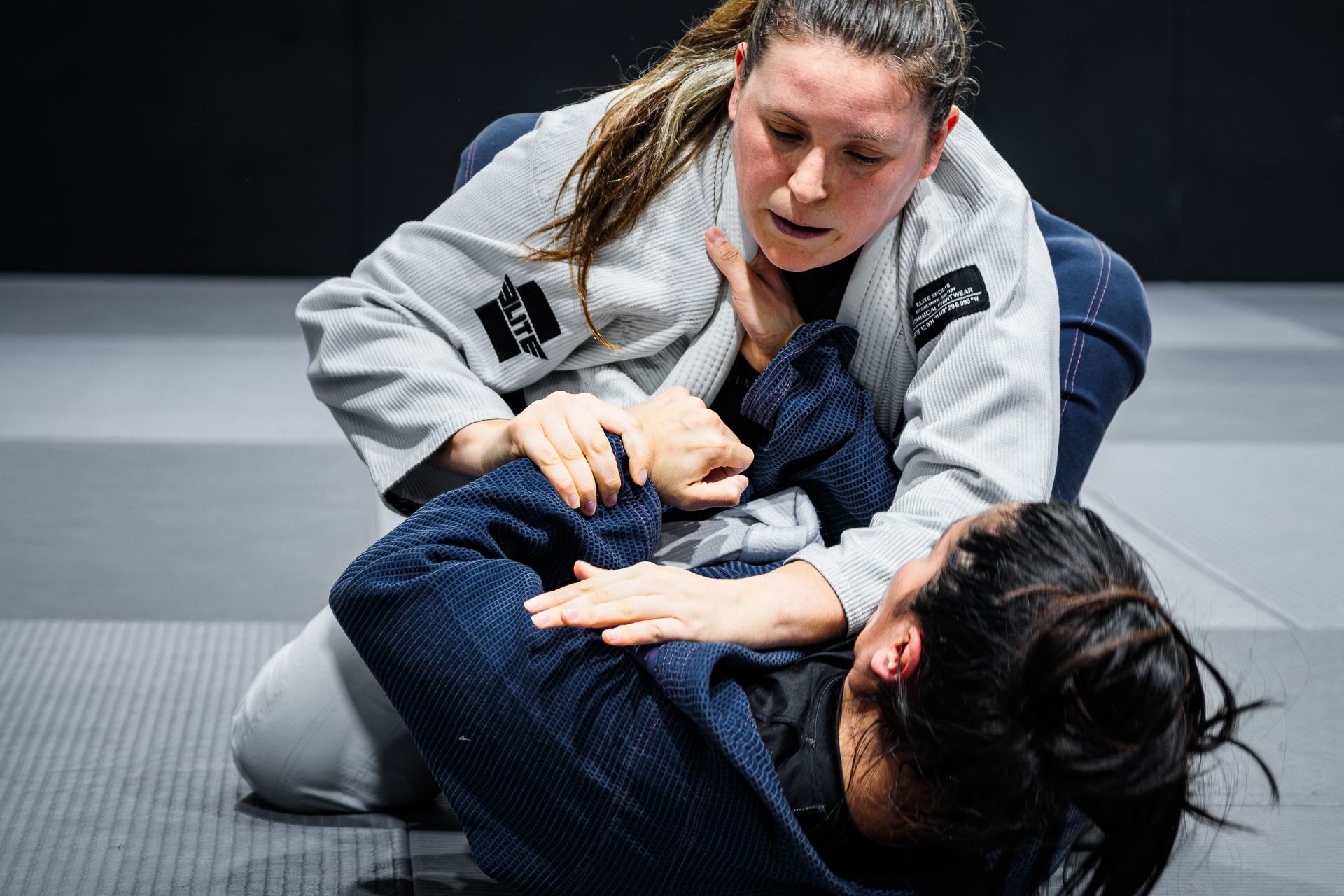
Discover why more women are choosing Jiu-Jitsu for self-defense, fitness, confidence, skill development, and community—and what to expect when starting.
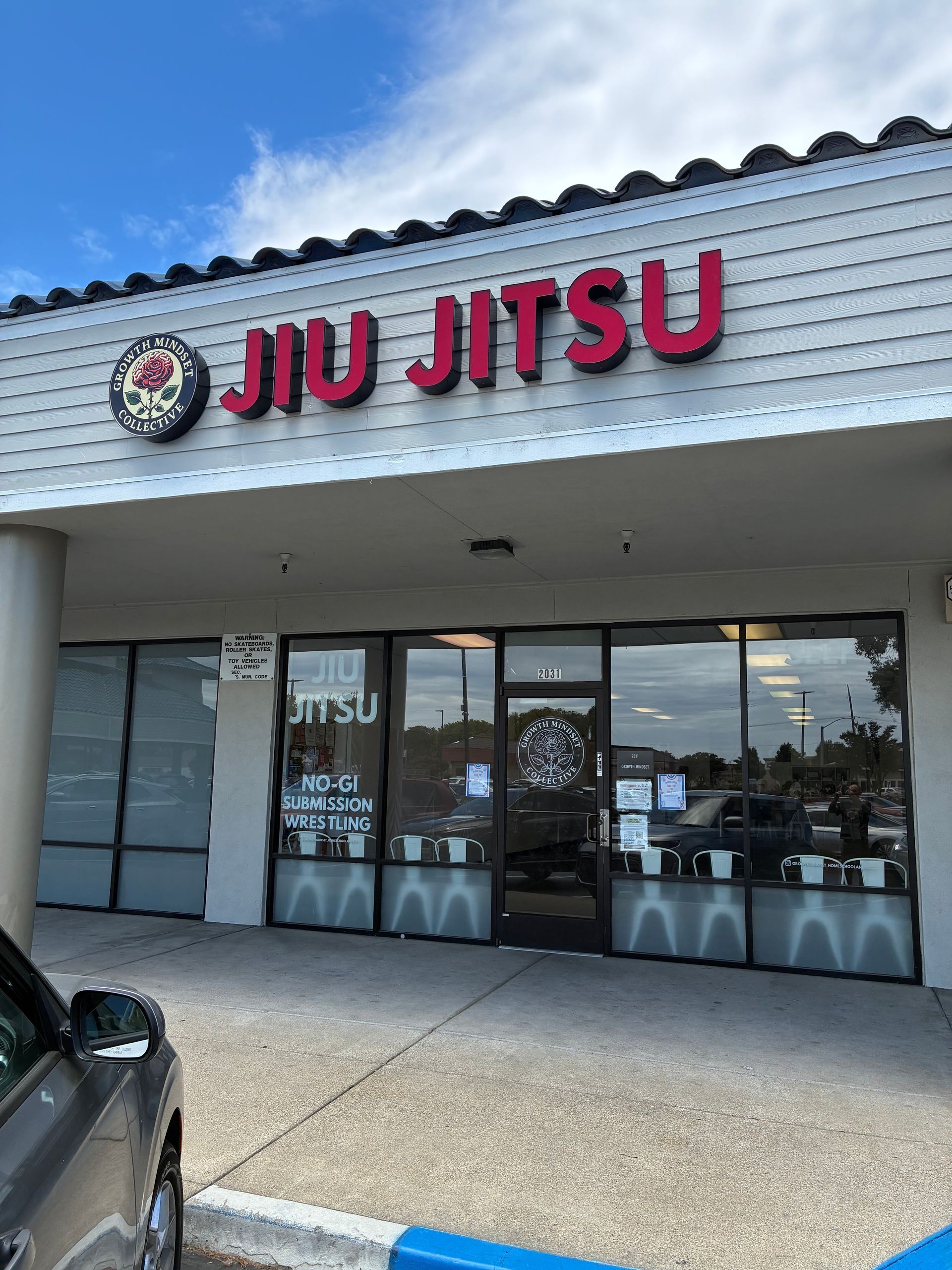
From the Garage to Our Own Academy